
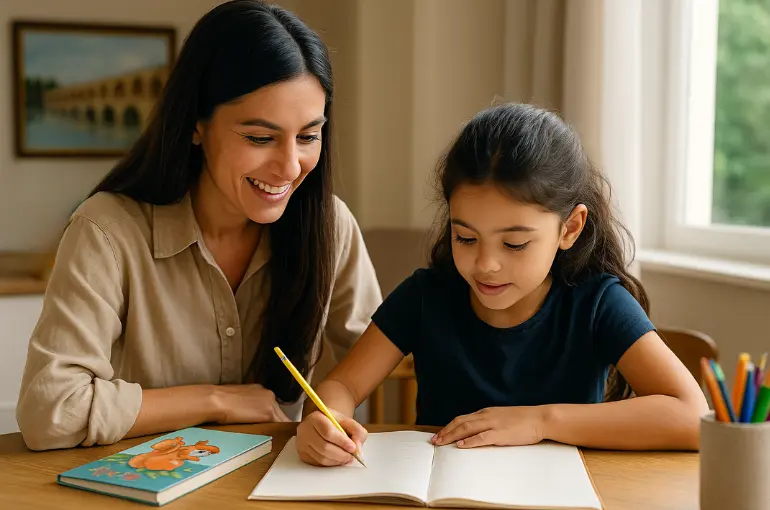
Have you noticed your child hesitating to speak Farsi — or avoiding it altogether?
For many second-generation Iranian-American families in Dallas, this is an all-too-common moment. In an English-dominated environment, the Persian language often fades into the background. But losing Farsi isn’t just about language — it’s about losing connection to culture, identity, and heritage.
Teaching Farsi to your child in Dallas is one of the most powerful ways to help them embrace their roots. It builds bilingual confidence, fosters emotional connections, and creates a sense of belonging in both Iranian and American worlds. In this article, we’ll explore the lasting benefits of learning Farsi — from brain development to deeper family ties — and how you can start today.
The Cultural Value of Farsi: More Than Just Words
Language is more than vocabulary — it’s memory, tradition, and identity. When a child understands and speaks Farsi, they unlock a direct connection to their heritage, their grandparents, and centuries of Persian culture that shaped who they are.
For Iranian-American families, especially those raising kids in Dallas, teaching Farsi is a way of keeping culture alive at home. It empowers children to understand Nowruz traditions, enjoy Persian stories and music, and feel pride when pronouncing their name correctly in their mother tongue. It also creates shared moments — like laughing at a family joke that just doesn’t translate into English — that build emotional closeness.
In a multicultural society, knowing Farsi gives children a strong foundation in their unique identity. It helps them feel grounded, understood, and confident — not just as Americans, but as Persian-Americans with a story to tell.
Cognitive & Academic Benefits of Bilingualism
Bilingualism isn’t just a cultural advantage, it’s a brain booster.
Studies consistently show that children who speak more than one language perform better in areas like memory, attention control, and problem-solving. Learning Farsi alongside English strengthens a child’s ability to think flexibly, switch between tasks efficiently, and even delay the onset of age-related cognitive decline later in life.
For school-age children, these cognitive advantages often translate into academic gains. Bilingual kids tend to score higher in reading comprehension and show greater metalinguistic awareness — that is, understanding how language itself works. This can give them an edge not just in language arts, but in all subjects that require complex reasoning and communication.
In short, giving your child the gift of Farsi is also giving them a sharper mind and stronger learning tools for life.
Building Confidence and Stronger Identity
For children of Iranian heritage growing up in the U.S., language is more than communication, it’s a key to belonging.
Learning Farsi helps children feel more rooted in their identity. They begin to understand family stories, connect with cultural traditions, and take pride in who they are and where they come from. This cultural connection fosters a stronger sense of self, which directly impacts their confidence in school, social situations, and beyond.
In bilingual households, it’s common for kids to feel a gap between the culture at home and the one outside. Farsi classes help bridge that gap. Children learn that speaking a second language is not a limitation, but a superpower, something to be celebrated.
With each new word learned and every successful conversation held with a grandparent or community member, their self-esteem grows. They’re not just learning a language — they’re reclaiming a part of themselves.
Creating Meaningful Connections Across Generations
One of the most heartwarming outcomes of learning Farsi is the deeper connection children build with their extended family, especially grandparents.
For many families, grandparents are a living bridge to cultural memory, values, and stories. But when a language barrier exists, so much of that richness can get lost. Children may feel distant, and elders may struggle to fully express their love, wisdom, and life experiences.
Learning Farsi reopens that channel.
When a child begins to speak even a few words of Persian, the joy it brings to grandparents is immeasurable. These shared moments of communication—whether through a bedtime story, a favorite proverb, or simply asking how someone’s day was—become threads that weave generations together. It’s not just about language; it’s about connection, respect, and emotional closeness.
In these interactions, children learn more than vocabulary—they absorb empathy, gratitude, and cultural depth that only comes from real, human connection.
Encouraging Respect for Cultural Diversity
In today’s interconnected world, fostering respect for diverse cultures is not just a value—it’s a necessity. Teaching children Farsi is more than an act of preserving heritage; it’s a gateway to broader cultural understanding.
When children learn Persian, they don’t just acquire a set of new words—they begin to see the world through a different cultural lens. They explore stories, holidays, customs, and values that may be unfamiliar to their peers. This exposure helps children develop empathy and appreciation for ways of life that differ from their own.
In a multicultural society like the U.S., this skill becomes a superpower. Children raised to respect and understand cultural differences are more likely to become inclusive, open-minded adults. They’re better equipped to collaborate in diverse classrooms, workplaces, and communities.
By learning Persian, children aren’t just learning a language—they’re gaining tools to thrive in a global society.
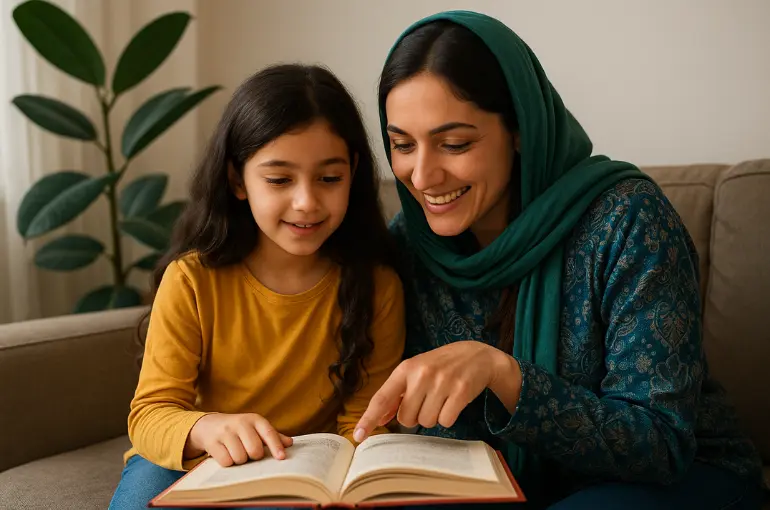
How to Support Your Child’s Persian Learning Journey at Home
Language learning doesn’t stop when class ends—it blossoms at home. As a parent, your role in supporting your child’s journey in learning Persian is vital. Even if you’re not fluent in Farsi yourself, there are simple yet powerful ways to create an enriching environment.
Here are a few suggestions:
Create a language-friendly space: Label common household items in Persian. Post simple Farsi words or phrases around the house. This builds everyday familiarity.
Read together in Persian: Storybooks, poems, or even basic readers can ignite interest and help build vocabulary.
Incorporate music and games: Persian songs, cartoons, or mobile apps can make language learning playful and fun.
Practice conversations: Encourage your child to use Farsi during daily routines, like greetings, mealtimes, or bedtime.
Consistency is key. Celebrate small wins—like recognizing a word or using a new sentence—and show enthusiasm. The more children feel supported and seen, the more confident and motivated they’ll become.
Common Challenges in Learning Farsi—and How to Overcome Them
Every language-learning journey comes with its ups and downs—and Farsi is no exception. Whether your child is just starting out or already knows a few words, here are some common challenges they might face, along with practical tips to navigate them.
1. Limited Exposure to Persian Outside Class
The Challenge: Many kids live in environments where English dominates their daily interactions.
How to Overcome It: Set aside “Farsi moments” at home. These could be specific times during the day—like dinner or bedtime—where only Farsi is spoken. Using media like Persian music, children’s shows, or storybooks also helps build natural exposure.
2. Mixing Languages (Code Switching)
The Challenge: Children may blend Farsi and English in the same sentence.
How to Overcome It: Gently correct them and repeat the sentence in Farsi. Consistent exposure and patient repetition are key. Remember, this is a sign of learning—not failure.
3. Lack of Motivation
The Challenge: If kids feel disconnected from Persian culture or don’t see the relevance, they may resist learning.
How to Overcome It: Help them see the bigger picture—connecting with grandparents, traveling, reading stories from Persian literature. Involve them in fun cultural experiences like Nowruz celebrations or Persian cooking at home.
4. Reading and Writing Difficulties
The Challenge: The Persian script, which is written right to left, can be intimidating at first.
How to Overcome It: Break it down into simple, playful steps. Use colorful visuals and tactile activities like tracing letters in sand or using letter magnets.
By recognizing these challenges early and supporting your child with empathy and creativity, you can turn roadblocks into stepping stones—and make learning Farsi a joyful, meaningful part of their life.
The Lifelong Value of Speaking Farsi
Teaching your child Farsi isn’t just an investment in their present — it’s a legacy that will accompany them into adulthood and beyond.
Children who learn Persian gain more than just language skills; they develop a deep-rooted connection to who they are. As they grow, Farsi becomes a living link to their family’s history, cultural values, and sense of belonging. It’s what helps them not only navigate two languages, but also understand two worlds — Iranian and American — with confidence and pride.
As bilingual speakers, these children are more likely to succeed in diverse environments. They are equipped to communicate with a broader network, access literature and media in multiple languages, and thrive in multicultural workplaces. Speaking Farsi can also open doors to opportunities in diplomacy, international business, education, and community leadership — especially in a globally connected city like Dallas, where cultural fluency is a growing asset.
But perhaps the most profound impact is internal. Farsi becomes a foundation for identity and self-respect. Children who can converse with their grandparents, recite poems by Hafez, or celebrate Nowruz with full understanding are not just speaking a language — they are living a legacy.
And that legacy lasts a lifetime.
Conclusion: Language as Legacy
In an ever-globalizing world, where cultural identities often blur and traditions can fade in a single generation, teaching your child Farsi in Dallas is a deeply intentional act of preservation and empowerment.
Farsi is not just a set of words. It’s the voice of a culture, the rhythm of family gatherings, the soul of ancient poetry, and the memory of a homeland. By helping your child speak Persian, you’re offering them the confidence to express their identity with clarity — to say, “I know who I am, and where I come from.”
It’s a gift that reaches beyond school grades and language milestones. It’s about nurturing emotional depth, cultural empathy, and a lifelong sense of rootedness. Whether your child uses Farsi to connect with grandparents, explore Persian literature, or one day pass it on to the next generation — the impact is lasting.
You don’t have to do it all at once. Start with one word, one story, one moment of connection. The journey will unfold — and it will be worth it.
Start where you are. Use what you have. Speak what you can. The journey begins with one word.