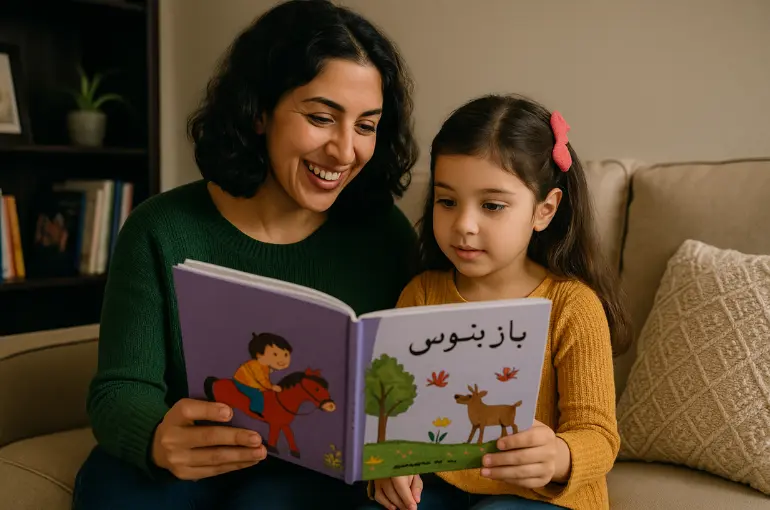
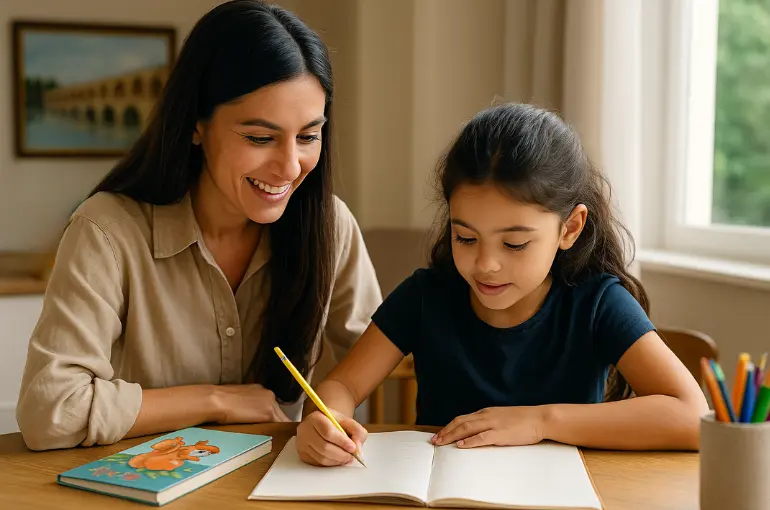
The Cognitive Benefits of Raising Bilingual Children
Cognitive Benefits of Bilingual Kids | English & Farsi Language Development
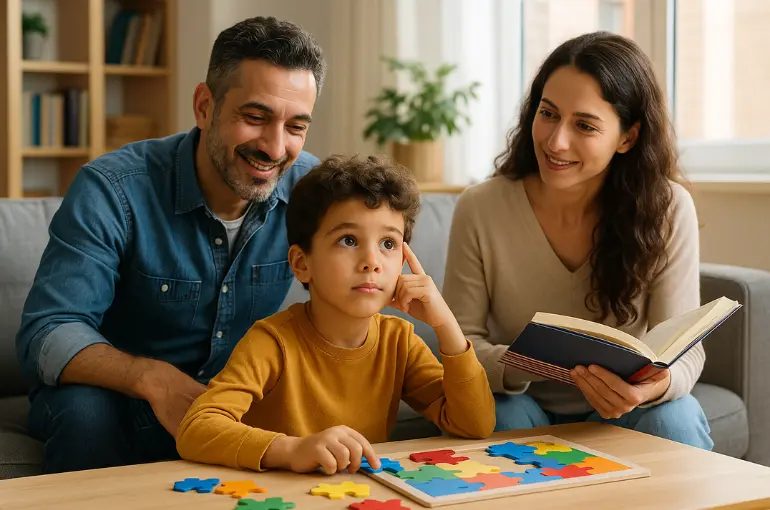
Raising a bilingual child is one of the greatest gifts parents can offer in today’s globalized world—especially for Iranian-American families navigating life between two cultures. The benefits of speaking both English and Farsi go far beyond language proficiency. Research consistently shows that bilingualism can significantly enhance a child’s brain development, academic performance, and emotional intelligence.
When children grow up hearing and using both Farsi and English, their brains develop increased flexibility, improved memory, and better problem-solving skills. This isn’t just theory—it’s backed by decades of neuroscience and education studies. For Iranian families living in the U.S., preserving the Farsi language for kids isn’t only about cultural heritage; it’s also a smart investment in your child’s cognitive future.
Whether you’re already committed to bilingual parenting or just beginning to explore the possibilities, understanding the cognitive benefits can give you the motivation and confidence to keep Farsi alive in your home—and beyond. And if you’re in the Dallas area, our Farsi classes in Dallas are designed to support exactly this journey, blending language learning with cognitive growth in a fun and engaging way.
How the Bilingual Brain Works
The brain of a bilingual child functions in unique and powerful ways. When a child switches between English and Farsi, their brain must constantly manage, filter, and select between two language systems. This mental juggling strengthens what neuroscientists call cognitive flexibility the ability to adapt to new information, shift between tasks, and think from multiple perspectives.
Studies using brain imaging have shown that bilingual individuals often have more activity in the prefrontal cortex, the region responsible for executive function skills such as planning, focus, and decision-making. That means bilingual children are not just learning two sets of vocabulary, they’re actively training their brains to process information more efficiently.
Even young children who speak Farsi at home while learning English at school show early signs of improved attention span, better problem-solving, and stronger memory skills compared to their monolingual peers.
And it doesn’t require perfect fluency. Just being exposed to and using two languages consistently helps the bilingual brain develop more robust neural connections, setting the stage for long-term academic and personal success.
For Iranian-American parents, this is a powerful reminder: every time you read a book in Farsi or have a simple conversation with your child, you’re not just preserving culture, you’re shaping a smarter, more adaptable mind.
Improved Focus and Task Switching
One of the lesser-known but powerful advantages of bilingual parenting is how it strengthens a child’s ability to focus and switch between tasks. These skills fall under what psychologists call “executive function”—the brain’s system for managing attention, memory, and self-control. And bilingual kids tend to outperform their monolingual peers in this area.
Why? Because every time a child moves between Farsi and English, their brain must activate one language while suppressing the other. This constant switching is like a mental workout, helping children develop stronger focus, better self-regulation, and faster decision-making skills.
For example, studies show that bilingual children are often better at:
Ignoring distractions in the classroom
Switching between subjects or instructions
Solving puzzles or complex problems
Staying on task longer
These are not just academic skills—they’re life skills that influence everything from learning to emotional regulation.
For Iranian-American families, encouraging even simple back-and-forth language use at home—like naming things in both Farsi and English—helps build these essential mental muscles early. And when supported by structured programs such as our Farsi classes in Dallas, children gain the added benefit of consistent practice in an environment designed to nurture both focus and language growth.
Language Learning Boosts Memory and Problem-Solving
Learning a second language—especially from an early age—has a measurable impact on a child’s memory and problem-solving abilities. When children engage with both Farsi and English, their brains are constantly challenged to recognize patterns, recall vocabulary, and adapt to different grammatical structures. This continuous stimulation enhances working memory, which is critical for academic learning, reading comprehension, and mathematical reasoning.
The bilingual advantage is especially noticeable in tasks that require children to think creatively or solve unfamiliar problems. Studies have shown that bilingual kids often:
Approach problems from multiple angles
Show higher levels of cognitive resilience
Are more comfortable with ambiguity and abstract thinking
Why does this matter? Because real-life challenges—whether in school or social settings—rarely have one clear answer. A child who grows up switching between Farsi at home and English at school is naturally trained to think flexibly and resourcefully.
Simple activities like storytelling in Persian, playing memory games using Farsi vocabulary, or even solving puzzles with bilingual instructions are excellent ways to strengthen these skills.
Parents in the Dallas area can also amplify these benefits through participation in our Farsi classes for kids, where language learning is combined with logic games, role-playing, and culturally rooted critical thinking exercises—all designed to boost cognitive performance while preserving cultural identity.
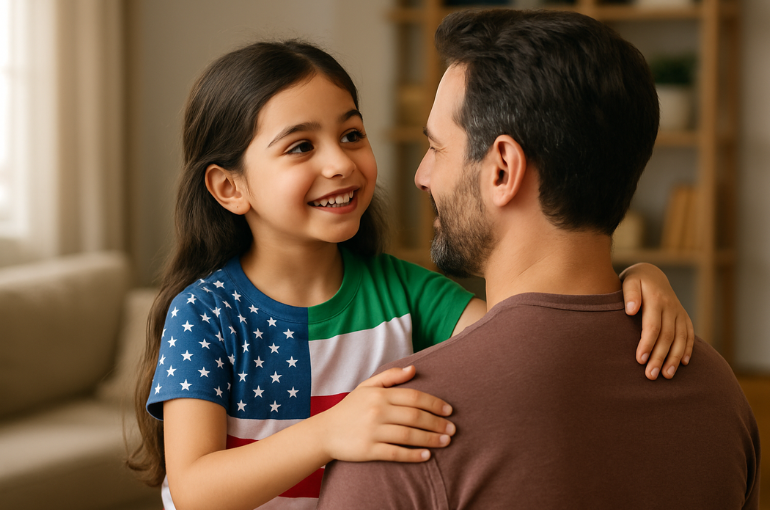
Cultural Identity Strengthens Emotional Intelligence
Beyond brain power, raising a bilingual child also nurtures something just as important: emotional intelligence. When children learn and use their heritage language, such as Farsi, they’re not just absorbing vocabulary—they’re connecting with their roots, their values, and a sense of who they are.
Studies have shown that children who grow up bilingual often exhibit:
Greater empathy and social sensitivity
Stronger communication skills across cultures
Higher levels of self-awareness and confidence
This happens because language and identity are deeply intertwined. Speaking Farsi at home helps children understand where they come from, how their family communicates, and why certain customs and expressions matter. These insights build emotional depth and cultural respect—both of which are key elements of emotional intelligence.
For second-generation Iranian-American children, being able to speak with grandparents or understand Persian poetry, music, and stories fosters a sense of belonging that goes far beyond words. It strengthens family bonds and builds pride in their background, which directly contributes to healthier self-esteem and emotional growth.
Our Farsi classes in Dallas emphasize this connection by blending language learning with cultural immersion—helping children not only speak Persian but feel Persian. Through stories, art, music, and celebrations, we reinforce the emotional value of heritage alongside language development.
Support from Farsi Classes in Dallas
While creating a bilingual environment at home is powerful, many families find that formal instruction provides the structure and consistency their children need to truly thrive. That’s where our Farsi classes in Dallas come in.
At our Persian language school, we go beyond memorization and grammar. Our goal is to support the whole bilingual child—cognitively, emotionally, and culturally. Through interactive lessons, storytelling, music, and cultural activities, we create a nurturing space where children feel seen, valued, and connected.
Here’s how our program supports your efforts at home:
Consistent exposure to spoken and written Farsi
Peer interaction that normalizes using Farsi in everyday conversations
Cultural immersion through celebrations, arts, and history
Tailored instruction for second-generation learners who may understand Farsi but need help expressing themselves confidently
For many families, this kind of supportive structure is the bridge between casual exposure and true fluency. When your child hears the same vocabulary and values reinforced at school and at home, the impact multiplies—and so does their motivation.
If you’re based in Dallas and committed to raising bilingual kids, our classes are designed to empower both children and parents on this journey. Together, we can help ensure that Farsi is not only preserved, but celebrated for generations to come.
Conclusion: Bilingual Brains, Stronger Futures
Raising a bilingual child in today’s world is more than a cultural choice—it’s a cognitive advantage. From sharper memory and improved focus to better emotional intelligence and stronger problem-solving skills, the bilingual brain is wired for success. For Iranian-American families, nurturing both English and Farsi creates a balanced, enriched foundation for lifelong growth.
But this journey doesn’t have to be taken alone. By combining intentional language exposure at home with professional support from Farsi classes in Dallas, you can ensure your child gets the best of both worlds—academic advantage and cultural pride.
Whether you’re just starting or already building a bilingual home, remember: every story read in Farsi, every holiday celebrated, every class attended, is an investment in your child’s future—one that honors the past and empowers what’s to come.
Ready to support your child’s cognitive and cultural development?
Join our growing community of families and explore our Farsi programs today.
More Articles You Might Enjoy